


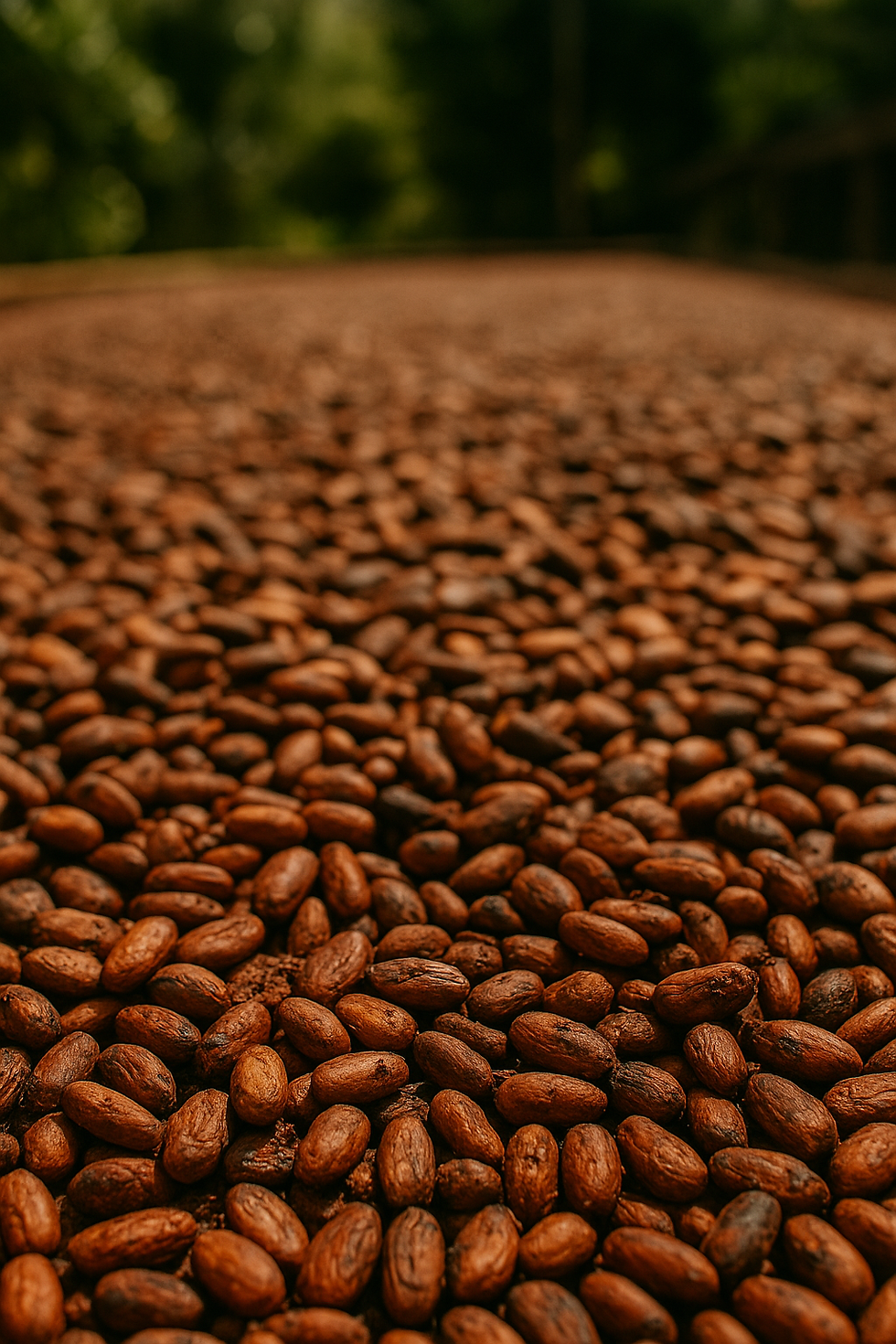

History of Cacao: Part 7 — Across the Oceans

A Cargo Waiting To Sail
In August 1653, the frigate Nuestra Señora de la Limpia Concepción stood at La Guaira, on Venezuela’s Caribbean coast, loaded with cacao. Its crew had been hired for the voyage to Veracruz. Before departure, the captain needed money for wages and a new foremast. A merchant advanced the credit, to be repaid after the ship reached Mexico. [1]
Historian Robert J. Ferry’s account follows cacao through the practical business of moving it: ships, repairs, sailors, loans, and distant buyers. The expanding trade connected American ports to one another as well as to markets across the Atlantic.
Recipes Cross With The Beans
Chocolate traveled with knowledge of how to prepare and serve it. In 1631, the Andalusian physician Antonio Colmenero de Ledesma published a treatise on chocolate in Madrid. He discussed the nature of cacao, the preparation of the drink, and when and how much people should consume. [2]
His formula brought cacao together with ingredients including sugar, cinnamon, anise, and chili. Substitutions allowed readers to work with what they could obtain. The book’s own journey followed the drink’s widening audience: the Edward Worth Library holds a Latin edition printed in Nuremberg in 1644, and an English translation appeared in 1652. [2]

Chocolate entered European medical debate as well as kitchens. Physicians interpreted it through the medical systems of their day, while printers and sellers offered both instructions and the chocolate itself. A drink could circulate through a bookshop as well as a household. [2]

An Opening In The Lid
The objects made for chocolate preserve the work of preparing it. A London silver chocolate pot made by Isaac Dighton in 1697–98 has a high-shouldered body and a low, domed cover. A detachable cap in the lid allowed a stirring rod to pass into the vessel. [3]
The rod, or molinillo, stirred the heavy sediment before pouring. The pot’s shape drew on a Chinese vase form: an American ingredient, a Spanish-named tool, and an Asian-inspired form met in a London object. [3]
As the Metropolitan Museum’s exhibition on chocolate, coffee, and tea explains, overseas contacts brought new drinks and prompted the development of new utensils. These objects first served great households and then reached a wider market. [4]

The Work Behind The Cargo
Growing demand also changed the places that supplied cacao. Around Caracas, colonial cultivation involved Indigenous labor compelled through encomienda and the labor of enslaved Africans. Ferry documents how profits from cacao sales financed purchases of enslaved people and the expansion of cultivated groves. [1]
The cargo at the waterfront belonged to this agricultural and commercial system. Cultivation, ownership, transport, and credit connected estates to merchants and consumers far beyond the growing regions. The longer Venezuela story continues in the companion article below.
Westward Across The Pacific
Cacao also traveled west from the Americas. The Manila galleon trade linked Acapulco and the Philippines between 1565 and 1815. Historian Angela Schottenhammer traces cacao shipments to Acapulco from Pacific American ports, including Callao and Guayaquil; some cacao reaching Acapulco continued to the Philippines. [5]
Chocolate could travel as provisions as well as merchandise. Passengers took it aboard ships, and missionaries carried it through their networks. In the Philippines, the movement of cacao also led to cultivation. A letter written in Manila by Álvaro de Benavente on 6 June 1677 reported that cacao had recently begun to be planted and was bearing fruit as it did in America. [5]

The ocean crossing carried more than a finished drink. It moved plants, preparation knowledge, and objects into new settings, where people developed their own ways of growing and consuming cacao.
Toward A Different Texture
By the end of the seventeenth century, cacao belonged to connections spanning American ports, European households, and Pacific crossings. Chocolate was still chiefly encountered here as a prepared beverage. The next chapter follows the machinery and processing changes that helped turn it into the chocolate bar.
Sources
Cover: an imagined seventeenth-century merchant ship and cacao cargo. Ship-form reference: Sebastian Castro, Harbour Scene: Spanish Ships Approaching a Jetty, BHC0755, National Maritime Museum, Greenwich, London, Palmer Collection. Original composition.


Comments