


The Birth of Trinitario: The Cacao That Survived

ORIGINS & INDIGENOUS WORLDS · SIDE STORY
Long before Trinitario became a familiar name on chocolate labels, Trinidad's cacao plantations suffered a mysterious collapse. What happened next was not a simple recovery. It was the beginning of a new cacao lineage—a story written by weather, migration, farmers and the trees themselves.
A crop on the edge
In the early 1700s, Spanish Trinidad relied heavily on cacao. Much of its cultivated crop had a Criollo background, connected to cacao grown in nearby Venezuela. Then came a devastating failure. Later accounts called it 'the blast' and placed it in 1727, often describing a hurricane or disease that swept across the plantations.
The records tell a more complicated story. Researchers Lambert Motilal and Thayil Sreenivasan found evidence that the collapse may have begun around 1725. They examined explanations ranging from weather and soil conditions to disease and the vulnerability of the cacao trees themselves. No single cause is conclusively established.
How Trinitario emerged
The island's cacao did not disappear forever. Over the following decades, new trees were introduced, including hardier Amelonado-related cacao from South America. Criollo-background trees also remained in the wider region and in Trinidad. As different lineages grew near one another, their pollen crossed, and growers cultivated the resulting trees.
Over time, this mixture became associated with the name Trinitario—literally, cacao of Trinidad. It was not the invention of one scientist or the product of one carefully documented cross. It was a population that developed through generations of cultivation and natural hybridization.
The Venezuelan connection
Trinidad's cacao story cannot be separated from Venezuela. Growers and migrants from the Paria Peninsula, often known as Cocoa Panyols, contributed knowledge and labor to the island's cacao economy, especially during its nineteenth-century expansion. Their history is part of how cacao moved and changed across the Caribbean.
A name that carries many origins
Trinitario is often described as a cross between Criollo and Forastero. That is a useful introduction, but genetic research shows the reality is more varied: 'Trinitario' does not identify one uniform genetic type, and some populations reflect several introductions and ancestral backgrounds.
That is what makes its origin remarkable. Out of an uncertain agricultural disaster came a new chapter in cacao's evolution. The trees that survived, the material that arrived, and the people who cultivated them helped create a cacao tradition now recognized around the world.
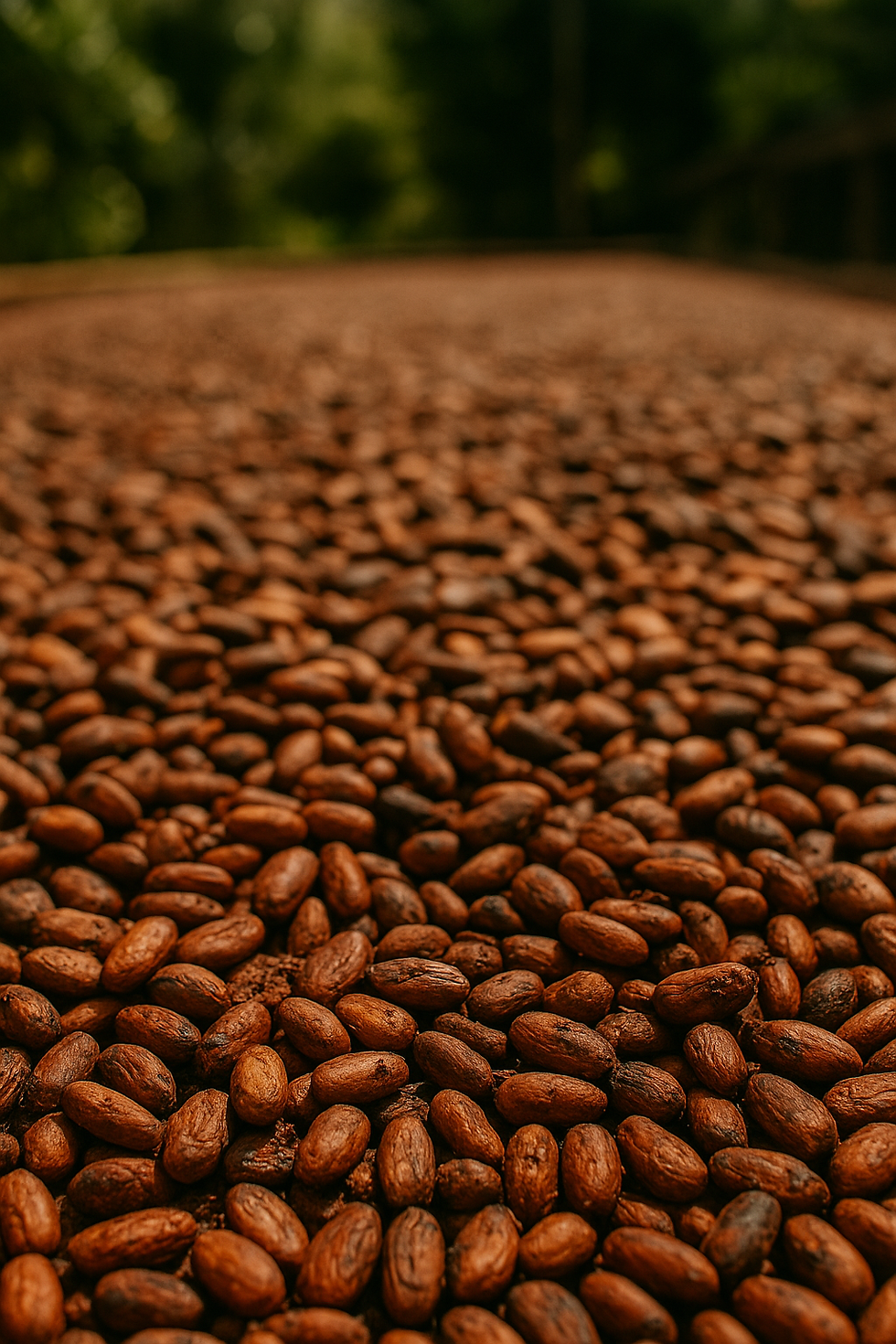
Artwork: original historical illustration for XOL, depicting closed cacao pods and Trinidad's landscape; interpretive, not an archival photograph.


Comments