



La Colonia: Did Chocolate Break the Fast? The Religious Debate of 1636

Updated: Oct 21
Imagine a seventeenth-century European drinking a rich cup of chocolate on a day of religious fasting. Had that person kept the fast—or quietly eaten a meal? It sounds almost comical now, but in 1636 it was serious enough to inspire an entire book.
The question reveals far more than a technical religious rule. It shows how a beverage developed in Indigenous America entered European daily life, acquired new ingredients and meanings, and challenged institutions trying to classify something unfamiliar.
At a glance
A 1636 book asked whether drinking chocolate broke a religious fast.
Quantity, nourishment, and intention mattered alongside the drink’s form.
The debate reveals how cacao acquired new meanings in colonial exchange.
A question important enough for a book
In Madrid in 1636, the scholar and legal writer Antonio de León Pinelo published Question moral: si el chocolate quebranta el ayuno eclesiástico—roughly, 'A Moral Question: Does Chocolate Break the Ecclesiastical Fast?' The original survives today in the John Carter Brown Library's holdings, accessible through the Biodiversity Heritage Library.
Chocolate had already become fashionable in Spanish society. Yet it posed a genuine problem for Catholic discussions of penitential fasting: liquids and solid foods were not always treated in the same way, and chocolate occupied an awkward space between the two.
This was not the same drink everywhere. American cacao traditions were varied, with distinct recipes, ingredients, preparations, and social meanings among different communities. Europeans adapted some of those traditions to their own tastes, including sweetened and spiced versions. The debate in Madrid should not be projected backward as if Indigenous communities all shared a single understanding of cacao.
Was it a drink—or a meal you could sip?
For some commentators, chocolate was clearly nourishing: it could satisfy hunger as well as thirst, especially when prepared with rich ingredients. Merely calling it a beverage did not settle whether it was compatible with the purpose of fasting.
The controversy had been discussed in New Spain before León Pinelo's book. Physician Juan de Cárdenas, writing in the late sixteenth century, argued that a sustaining chocolate drink could indeed interrupt a religious fast, although he contemplated limited medicinal exceptions.
León Pinelo's conclusion was more nuanced than either an outright prohibition or unlimited permission. As the historian Ascensión Hernández Triviño explains in a study published by UNAM, he recognized chocolate as substantial nourishment, yet argued that a small quantity could be permissible under the principle of parvidad—an allowance for very little food. He emphasized moderation and criticized people who repeatedly drank chocolate throughout an afternoon.
In other words, the argument was not just whether chocolate was liquid. It concerned quantity, nourishment, intention, and how a religious obligation should be interpreted.
What the debate says about colonial exchange
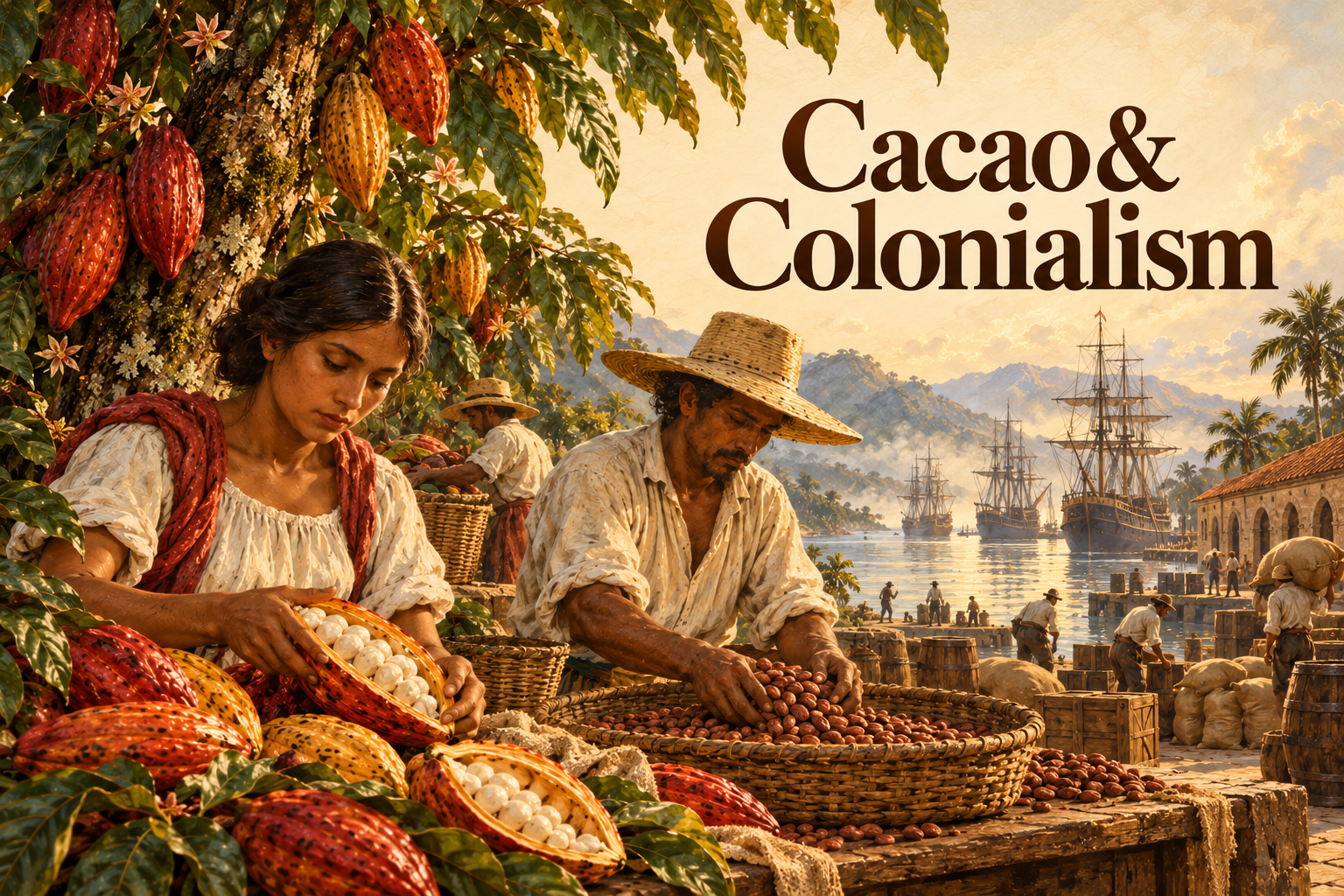
There is another story underneath this one. Cacao and its cultural knowledge came from Indigenous American societies. Spanish consumers and writers increasingly treated chocolate as a European social and religious question, even as its production and movement were embedded in colonial systems of trade, labor, and unequal power.
That does not make every European appreciation of cacao insincere. It does remind us that enthusiasm for a product and respect for the societies behind it are different things. The people whose traditions made cacao possible were not necessarily the people controlling the commercial and theological conversation in Europe.
Why this 400-year-old argument still matters
The fasting controversy is a small window into a much larger transformation: an Indigenous American preparation became a valued commodity, then an object of European debate about pleasure, nourishment, discipline, and social custom.
At XOL, we find that history worth telling because cacao should not be reduced to the product in the cup. Its story includes the people who grew it, the many ways communities prepared it, and the changes imposed on it as its popularity spread.
Four centuries later, the question is memorable: Did chocolate break the fast? The deeper lesson is that new foods do not enter a society untouched. People interpret them through their own beliefs—and the power to define them is rarely distributed equally.


Comments