



History of Cacao: Part 6 — When Cacao Became Money

Updated: Oct 22
Seeds In The Marketplace
At Tlatelolco, the great market beside Tenochtitlan, goods arrived from the Valley of Mexico and from distant regions. Maize, chilies, cotton cloth, pottery, feathers, and cacao moved through its trading spaces. Merchants and customers could exchange goods directly or settle a purchase with cacao beans or small cotton mantles. [1]
The seed that could become a drink could also become payment. Its journey joined cultivation to commerce: cacao passed from the places where it grew into markets, tribute deliveries, and the hands of people who accepted it in exchange.
Before The Mexica Market
Cacao’s monetary history reaches back into the Maya world. Archaeologist Joanne P. Baron examined cacao beans and cotton textiles during the Classic period, approximately 250–900 CE. Her research connects their development as currencies with expanding marketplaces among competing Maya kingdoms. [2]
Baron argues that goods already valued in displays of status acquired further uses in payments and exchange. Cacao and cloth could help meet household needs and finance activities of the state. Their value drew additional labor toward producing and obtaining them. A desirable material became something people sought both to use and to pass on. [2]
This was a history of seeds and textiles, rather than stamped chocolate discs. The cacao beans themselves circulated.

An Ordered Plaza
By the time Spanish visitors described Tlatelolco in the early sixteenth century, the market occupied a large stone-paved plaza beside the main temple. Porticoes and rooms around it served the administration of trade. Judges heard disputes, and officials watched over exchanges. Vendors were arranged by the kinds of goods or work they offered. [1]
Local producers brought food and manufactured goods. Long-distance merchants supplied materials from farther away, including cacao, vanilla, fine feathers, and cotton products. The market brought different landscapes into one place: highland foods beside tropical ingredients, finished objects beside raw materials. [1]

Tribute Drawn On Paper
The Codex Mendoza preserves another scale of movement. Its tribute pages record goods owed by provinces to the Mexica capital, using pictures and numerical signs. On folio 46 recto, the province of Tochtepec appears through its towns and its obligations: decorated garments, feathers, rubber, precious ornaments, and cacao. [3]
The University of Kentucky’s explanation of this page identifies an annual delivery of 200 loads of cacao. Quantities were expressed within a base-twenty counting system: a flag could indicate twenty, while other signs represented four hundred or eight thousand. The manuscript brings large deliveries into view through a compact visual record. [3]
Cacao’s presence here places the same valued seed within both market exchange and an empire’s collection of tribute.

Valuable Enough To Imitate
A cacao bean had a recognizable shell. That made deception possible. Royal Botanic Gardens, Kew, records counterfeit beans made by filling empty shells with earth. The outside could resemble the accepted object while the cacao within had disappeared. [4]
The history of value also survives in distinctions between beans. The Online Nahuatl Dictionary records a valuation of one tomin at 200 full beans or 230 shriveled ones. The condition of what changed hands mattered. [5]
Alongside Silver
Spanish conquest did not bring cacao’s monetary life to an immediate end. A Nahuatl document from Tlaxcala in 1545, cited in the same dictionary, linked one tomin to 200 cacao beans. A tomin was a real, one eighth of a peso. Indigenous cacao payments and Spanish denominations met within the same accounts. [5]

The seed had traveled through several kinds of value: an ingredient, a payment, a tribute good, and an object whose quality people judged. The next chapter follows cacao across the oceans, as chocolate entered new households and cacao became part of expanding overseas commerce.
Sources
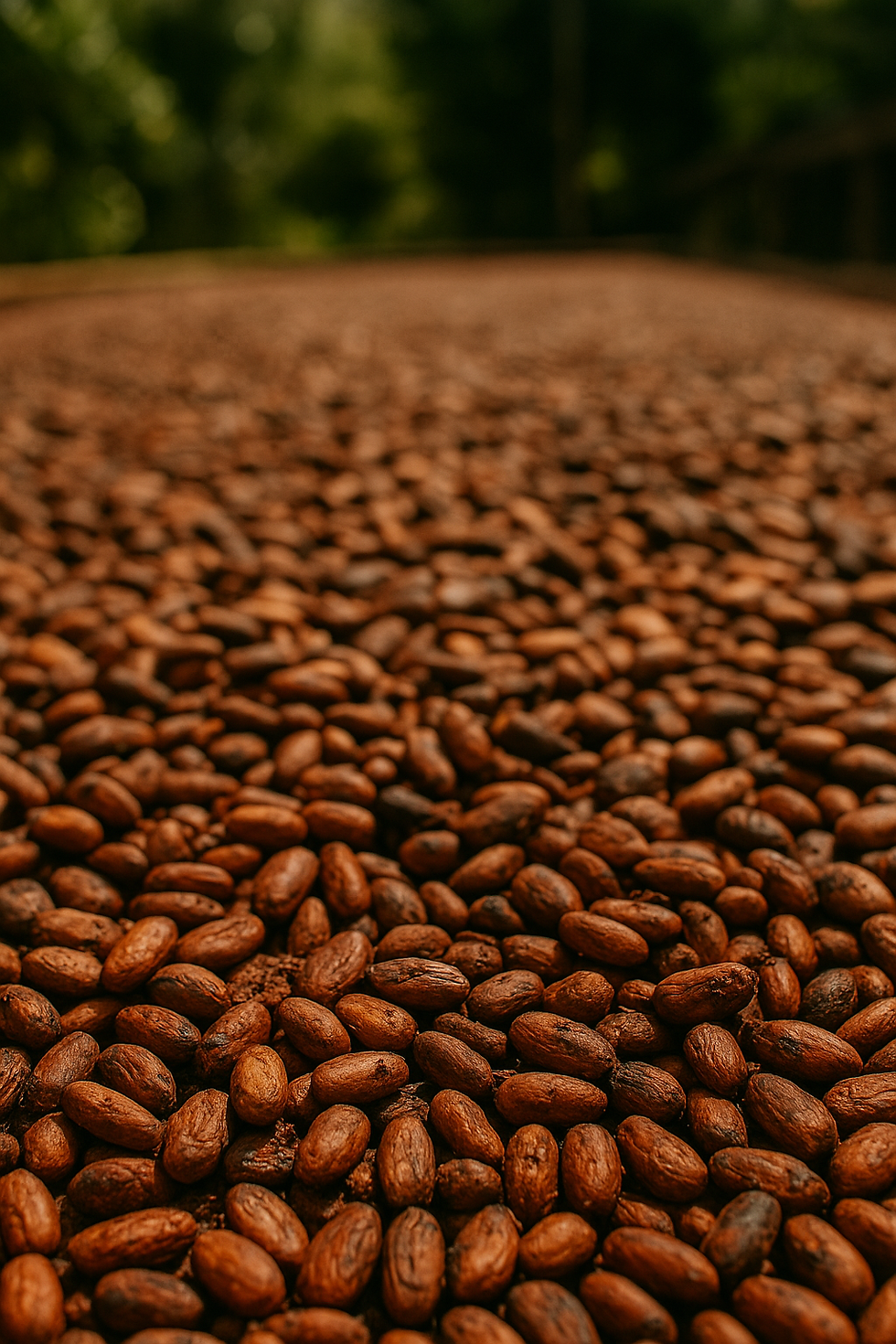
Cover: an imagined Mexica market transaction, informed by historical accounts and the Tlatelolco market model at Mexico’s National Museum of Anthropology. Reference photograph: Gary Todd (2012), CC0 1.0.


Comments