



History of Cacao: Part 9 — A New Geography of Cacao

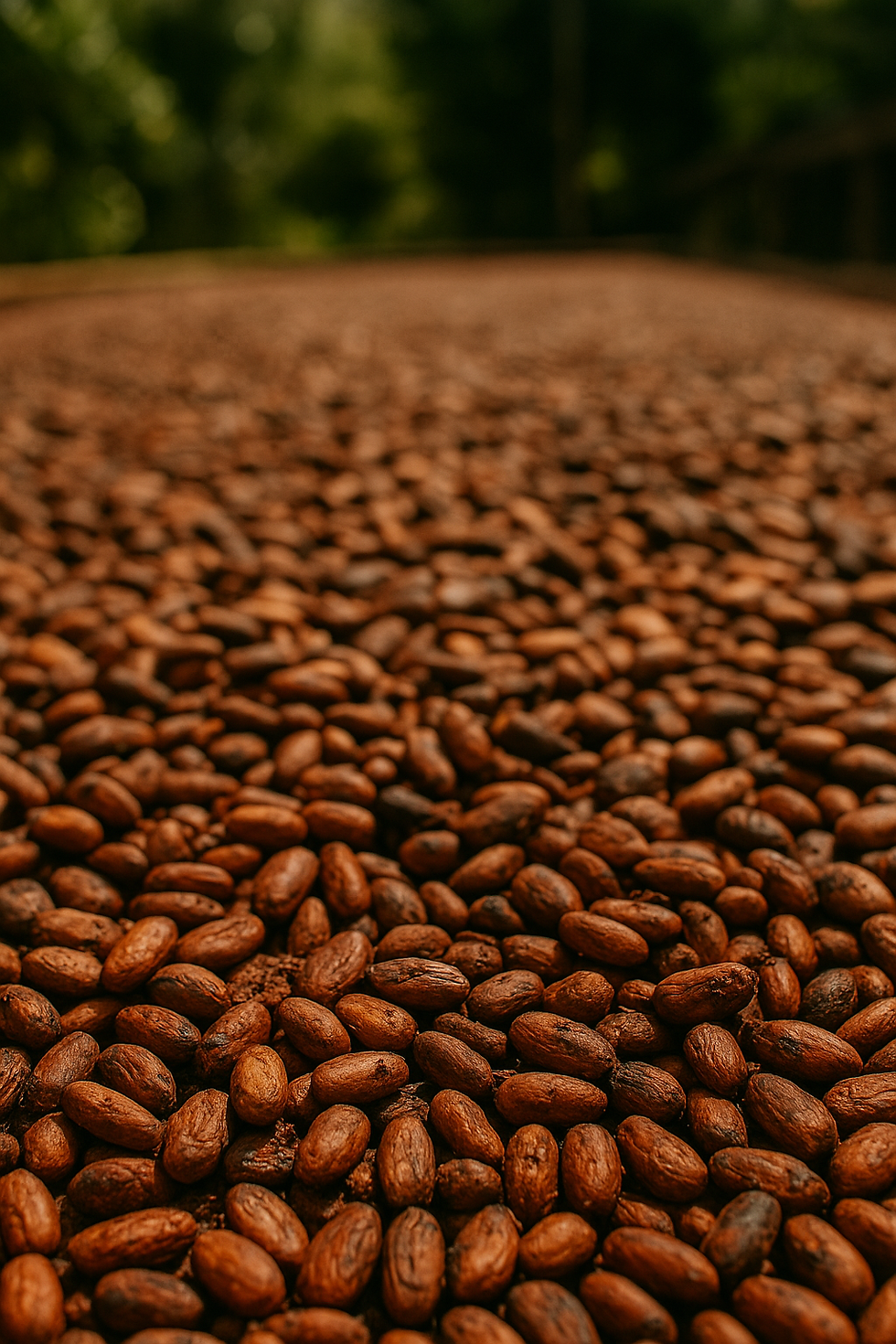
Around the turn of the twentieth century, cacao covered parts of Guayaquil’s streets. Archival photographs show workers spreading beans to dry, filling sacks, and preparing cargo beside the city’s commercial buildings. Cacao was a crop, an export, and a visible part of the port’s daily life. Ecuadorians called it pepa de oro: the seed of gold. [1]
Behind those sacks lay a changing world. As chocolate factories expanded, growers planted cacao in new regions. Seeds crossed oceans; farmers established orchards; ports connected tropical harvests with distant markets. The geography of chocolate was being remade.
The Seed Of Gold
Ecuador’s Banco Central museum dates the country’s second great coastal cacao boom to 1870–1920. Production and export linked the growing districts of the coast with the commercial world of Guayaquil. The boom became a major chapter in Ecuador’s economic history. [2]
The Río Guayas watershed was central to this trade. A historical account published by Harvard’s ReVista describes growers struggling to meet rising demand before the twentieth century. Planting material arrived from Trinidad and Venezuela, adding another movement of cacao within the Americas to the outward movement of exported beans. The commercial network carried living plants as well as dried harvests. [1]

Across The Atlantic, Into The Soil
Cacao could travel far, but it still needed warmth, moisture, and suitable soil to grow. Its new homes were tropical. The International Cocoa Organization traces plantings of Brazilian Amelonado cacao to Príncipe in 1822, São Tomé in 1830, and Fernando Po—now Bioko—in 1854. These Atlantic islands became important places in the crop’s expansion. [3]
This was a botanical crossing as well as a commercial one. Cacao from South America became planting stock in Africa. A seed transported overseas could grow into a tree whose own seeds supplied another farm.
The Plantation Complex
On São Tomé and Príncipe, production took shape in large estates called roças. Fields, processing facilities, residences, and other buildings formed organized agricultural complexes. Coffee and cacao tied these island estates to the international commodity trade. [4]
Their workforce was part of that history. UNESCO’s account of the roças documents forced migration and forced labor from the late nineteenth into the mid-twentieth century, continuing after the abolition of slavery. The surviving buildings record both agricultural production and the system through which labor was organized. [4]

A Farm At Mampong
Another route of expansion ran through growers acquiring planting material. Ghana’s Cocoa Board recounts how Tetteh Quarshie, a blacksmith who had worked on Fernando Po, returned in 1879 and established a cacao farm at Akwapim Mampong, in what was then the Gold Coast. Other farmers bought pods from his farm and planted their own trees. [5]
Earlier missionary plantings had already taken place. Quarshie’s farm became important in the wider spread of cultivation. In 1886, Governor William Bradford Griffith arranged another introduction of pods from São Tomé; seedlings raised at Aburi Botanical Garden were distributed to farmers. Farms and a botanical garden both helped multiply the crop. [5]

The Balance Shifts
At the beginning of the twentieth century, the Americas remained the principal producing region, with Ecuador, Brazil, and Trinidad prominent. The balance then changed. The International Cocoa Organization identifies about 1920 as the point when African output began overtaking production in the Americas. West Africa became the dominant producing region during the twentieth century. [6]
Asia’s cacao industry also expanded, particularly from around 1970, with production developing in countries including Indonesia, Malaysia, and Papua New Guinea. Trees introduced much earlier now supported a larger commercial sector. [3]
The Americas remained part of this growing geography. In Ecuador, cacao continued within coastal farms and Amazonian growing systems, including the chakra, where crops grow together in a managed landscape. [7] Across the producing regions, the global trade still began with local work: tending trees and preparing a harvest. The final chapter returns to those living practices, and to the many ways people continue to make cacao part of everyday life.

Sources
Cover: an imagined Guayaquil cacao-drying street around 1900. Original painting inspired by the archival Calle Panamá photograph reproduced in Harvard ReVista, courtesy Cecilia Estrada de Icaza.


Comments