


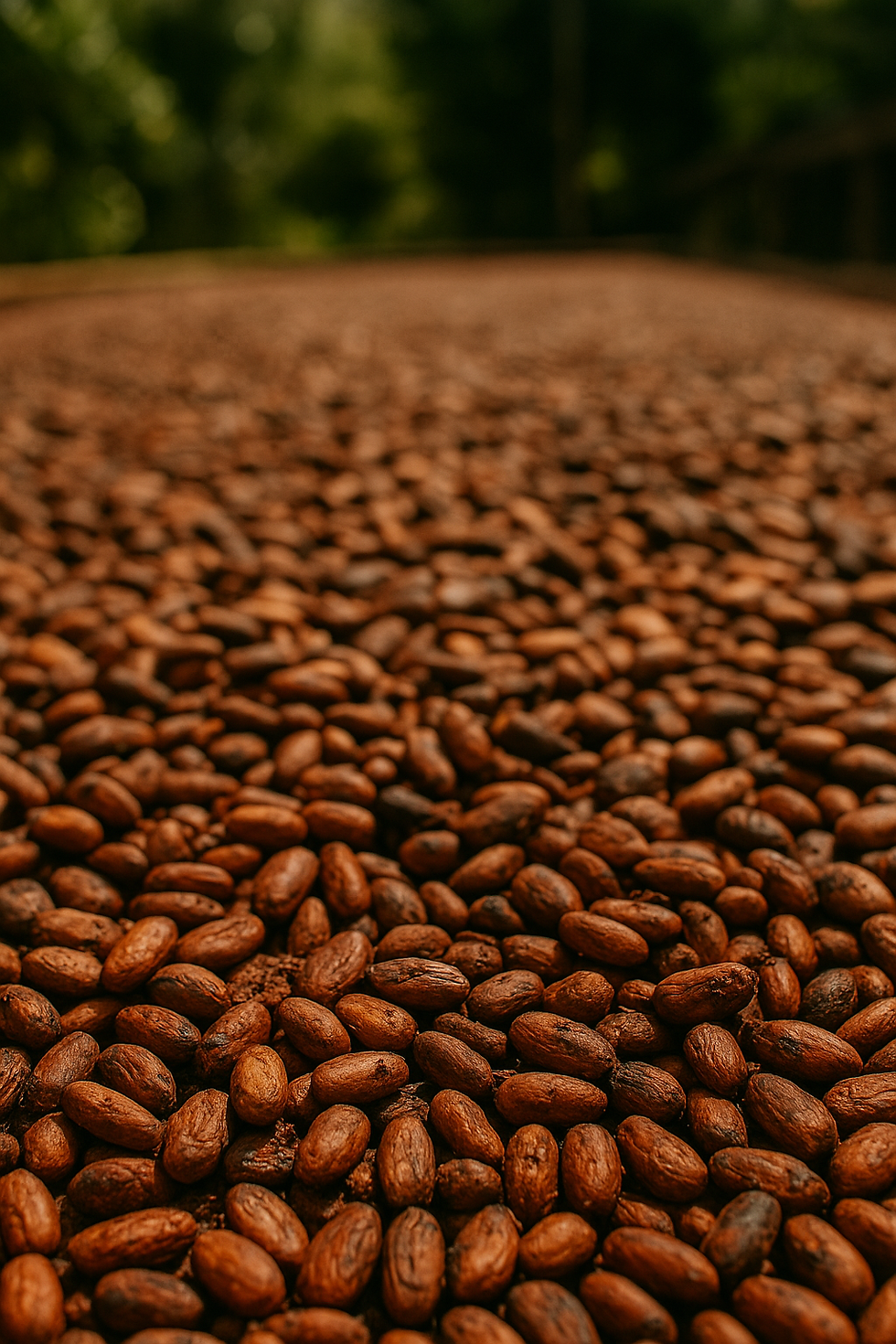

History of Cacao: Part 4 — Beyond the Palace: Cacao in Maya Life

Updated: Oct 22
A Cup With A Name
A drinking vessel could carry a person’s name into a Maya gathering. Around its rim, painted or carved signs identified the container, its contents, and sometimes its owner or giver. In Classic Maya art, cacao appears in a world of carefully made cups, courtly company, and drinks poured from one vessel into another to raise a froth. [1]
Those scenes preserve one setting for cacao. A different view emerges from the pottery left in homes around El Pilar, on today’s Belize–Guatemala border.
Beyond The Court
El Pilar’s surrounding settlements occupied uplands, foothills, and the Belize River valley. During the Late Classic period, approximately 600–900 CE, people used cacao across this varied landscape. The evidence comes from fragments of vessels that absorbed traces of what they once held. [2]
In a study published in 2022, Anabel Ford, Ann Williams, and Mattanjah S. de Vries examined 54 ceramic sherds from ten residential units and four civic centers. The selection included small, medium, and large residences. Thirty samples contained significant amounts of theophylline, the cacao marker used by the team in this regional setting. [2]
Positive results appeared in both civic and residential contexts, across different locations and household sizes. Vases, jars, bowls, and plates all had positive examples. The researchers interpreted the distribution as evidence of cacao use across social ranks. At El Pilar, the story extended from the civic center into the places where families lived. [2]

Reading A Drinking Cup
Some vessels speak through writing as well as chemistry. A dark brown Maya cup now at the Metropolitan Museum of Art bears a carved waterbird and an inscription identifying it as a cup for fresh or pure cacao. Dated to 600–900 CE, it belongs to the Chocholá ceramic tradition of northern Yucatán. Its owner held the noble title sajal. [3]
The inscription runs diagonally. When the drinker tilted the cup, the signs would become upright to companions watching nearby. The object joined drink, image, writing, and social identity in a single movement. [3]

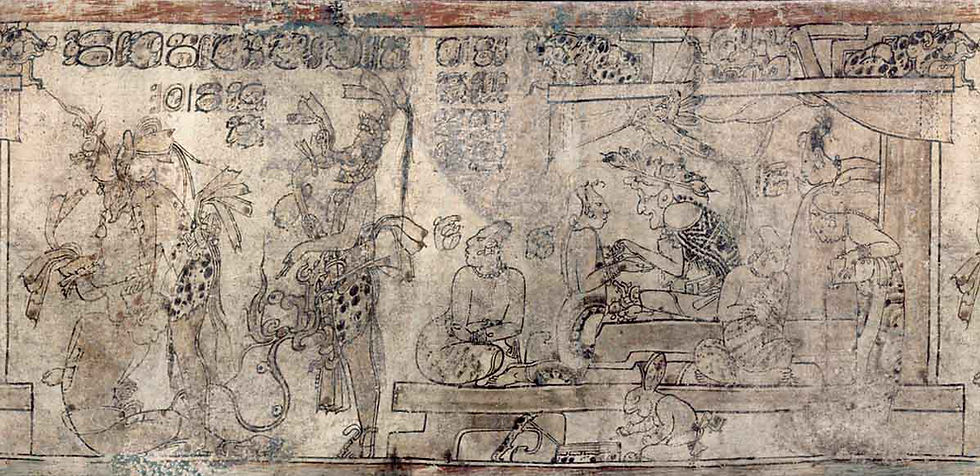
Elsewhere, the painted scene on the Princeton Vase shows a woman pouring liquid from a raised vessel toward another below. The Met connects this action with producing the prized froth of a cacao drink. Long before a chocolate bar could be held in the hand, the preparation and presentation of a beverage were part of cacao’s history. [1]
Houses Within A Living Landscape
The household story also reaches beyond the pottery. At El Pilar, researchers study settlement remains alongside the knowledge of contemporary Maya forest gardeners. The modern Tzunu’un house-site garden recreates an aspect of the ancient relationship between dwellings and useful plants. [4]
Forest gardens combine trees and other cultivated plants rather than separating every crop into a single-purpose field. Research at El Pilar describes a range of management strategies, from intensive cultivation around densely settled communities to more widely scattered fields. Homes formed part of this worked landscape, with paths connecting the spaces where people lived, cultivated, and gathered. [4]

From Households To Distant Horizons
The named cup and the broken sherd preserve different scales of Maya life. One records an individual and a beverage; the other allows cacao’s presence to be traced across a community. Together they bring the history closer to the hands that made, filled, and used the vessels.
The next chapter follows cacao into another setting entirely: the sandstone rooms and cylinder jars of Chaco Canyon, far north of the tropical forests where cacao grows.
Sources
Cover: an imagined Late Classic household scene, informed by El Pilar research. Architectural reference: Kaldari, Tzunu’un El Pilar (2014), CC0 1.0.


Comments