



History of Cacao: Part 10 — Cacao’s Living Traditions

In Oaxaca, a bowl of tejate brings cacao together with maize, mamey seed, and rosita de cacao. The ingredients are ground, combined with water, and worked by hand. Preparation transforms them into a cool drink with a pale, foamy surface. The knowledge is in the ingredients, but also in the movement of the hands. [1]
The history of cacao reaches the present in practices like this one. It continues in forest gardens, village drying patios, markets, and research collections. The places have distinct histories; each carries a part of cacao’s long journey.
A Drink And A Community
San Andrés Huayápam, in Oaxaca’s Central Valleys, celebrates tejate through a fair organized with the Unión de Mujeres Productoras del Tejate. In March 2023, the state’s tourism authorities announced the fair’s return after a three-year pandemic interruption. The programme brought together the drink, local foods, and cultural performances. [2]
Tejate is served in traditional jícaras as well as other containers. The women producers’ association connects preparation with community enterprise, while the fair gives visitors a place to encounter the drink. The tradition includes both work at the bowl and the organization that brings makers and customers together. [2]

Cacao In The Forest Garden
In Ecuador’s Amazon region, Kichwa and Kijus families cultivate cacao within the chakra. Timber trees, fruits, medicinal plants, and other useful species share the growing space. Cacao belongs to a managed mixture of plants rather than an isolated field. [3]
The Food and Agriculture Organization recognized the Amazonian Chakra as a Globally Important Agricultural Heritage System in 2023. Its account describes arrangements that provide shade and care for soil, with growing cycles shaped around forest succession. Women play a leading role in maintaining and transmitting the agricultural knowledge of Ecuador’s chakras. Here, cacao’s history includes the care of an entire growing landscape. [3]

The Village Drying Patio
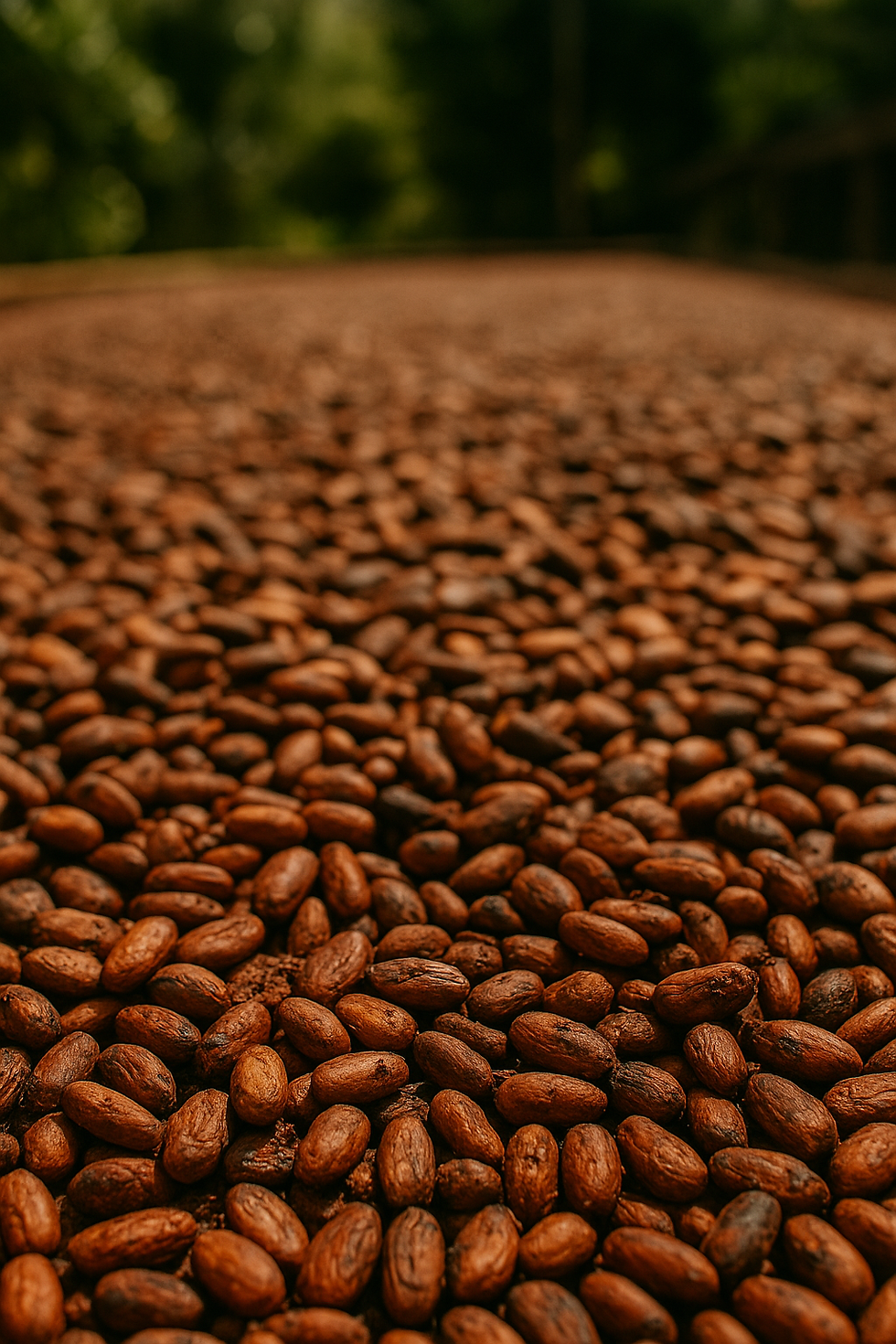
On Venezuela’s Caribbean coast, Chuao’s cacao work passes through wooden fermentation boxes and the drying space in front of the village church. Beans spread in the sun become part of a shared village setting. The producers’ organization, Empresa Campesina Chuao, was formed in 1976 to manage cultivation, harvest, and post-harvest work. [4]
Chuao first received its Venezuelan denomination of origin in 2000. In a 2022 account, the country’s intellectual-property service described work with producers to document harvesting, fermentation, drying, and other operations in manuals. Skills passed between generations were also being recorded in written form. The crop’s identity combined a particular place with the practices of its producers. [5]

After The Harvest
Flavor begins developing before cacao reaches a chocolate factory. The International Cocoa Organization describes fermentation on the farm and roasting by the processor as two important parts of chocolate-flavor development. Growers’ post-harvest decisions therefore remain part of the finished chocolate. [6]
Research continues alongside that practical knowledge. A 2024 study of fermentation and drying at two Ecuadorian locations compared different ways of handling cacao. Differences in fermentation conditions were reflected in the sensory qualities of the resulting cocoa liquor. The study examined specific working practices, linking preparation after harvest with what a taster eventually encounters. [7]

A Collection Of Living Trees
Cacao diversity is also maintained in field collections. A 2024 catalogue described more than 2,300 accessions at the International Cocoa Genebank in Trinidad, held by the University of the West Indies’ Cocoa Research Centre. Its history includes material collected during expeditions to Peru, Ecuador, and Colombia between 1935 and 1970, with later additions from elsewhere in the region. [8]
These are living plants available for study and breeding. The collection connects cacao’s South American diversity with research conducted across borders, adding another kind of garden to the story. [8]
This series began with traces of cacao in ancient vessels. It ends among people working with living trees and harvested seeds: tending a chakra, turning beans on a drying patio, preparing a drink, and studying a collection. The archaeological record reaches back thousands of years. The work continues in the present.
Sources
Cover: an imagined contemporary tejate-preparation scene in Oaxaca. Original painting informed by documentary photographs of hand preparation, earthenware basins, and painted jícaras; the makers are imagined people.


Comments