



Grinding & Refining — From Nibs to Cacao Mass

TRANSFORMING CACAO · PART 6
The core journey reaches a turning point here. Clean cacao nibs are ground into cacao mass, also called cocoa liquor or cocoa paste. This is the whole edible bean interior in a different physical form: its cacao butter remains with its nonfat solids.
Why dry-looking nibs can become a flowing paste
Cacao already contains the fat needed to make a paste. Grinding breaks the material into smaller particles, and warming allows its cacao butter to become liquid. The industry's laboratory milling guidance explicitly calls for gently warming nibs and equipment so the butter melts and assists grinding. [1]
The transformation does not require adding water. The resulting warm mass contains solid cacao particles dispersed through fat. When it cools, the fat can solidify again. Its liquid appearance during processing does not mean that the cacao solids have dissolved.
Making a paste and making it fine are different milestones
A pre-grinder can turn nibs into a coarse paste before another machine performs finer refining. For example, Selmi describes a pin mill producing a pre-refined mass with particles in the 100–300 micrometer range. That specification describes this machine's intermediate output, not a universal finished texture. [2]
For standardized flavor evaluation, industry guidance recommends a much finer mass and uses particle-size measurement to judge the endpoint. Its cited range is 14–25 micrometers. The purpose is to avoid distracting grittiness during tasting while preparing comparable samples. This is a laboratory evaluation protocol, not a rule that every cacao product must have the same particle size. [1]
The largest particles and the whole distribution both matter
A batch contains a population of particles, not one perfectly uniform size. A 2024 study of single-origin chocolates found two prominent size populations after shorter grinding; with longer processing, the larger-particle population decreased. The effects on flow also depended on formulation. [3]
The study reported that yield stress increased while its fitted plastic viscosity decreased with grinding time. These describe different aspects of flow: the stress needed to start movement and resistance once flowing. That result is a useful warning against assuming that finer particles always make every chocolate behave more fluidly.
For the maker, measuring texture and watching flow answer related but different questions. The product must feel appropriate in the mouth and behave appropriately during pumping, mixing or molding. The intended use determines what balance is useful.
Grinding also brings a temperature history
Mechanical processing can warm the mass. In flavor-evaluation milling, the industry protocol limits temperature to preserve the bean's inherent volatile profile; higher temperatures can strip volatile compounds more rapidly. [1]
It helps to distinguish refining, which concerns particle reduction, from conching, which deliberately works the mass to change properties beyond size. Depending on the equipment, some of these effects overlap. Naming the machine is less informative than recording what happened to the material.
One base, several paths
Cacao mass is the junction from which the rest of this collection branches. It can become an unsweetened cacao product, be formulated into chocolate, or enter processes that separate fat from the remaining material. Each route adds its own choices; they should not be collapsed into one generic instruction to “make chocolate.”
For the XOL products already covered in this library, continue with our cacao bars, ceremonial cacao, or preparing cacao with a frother.
The six core chapters explain how we arrive here. The companion articles explore the choices around that route—what can be separated, what can be blended, and how the same base behaves in different products.
Explore this stage
Sources
Artwork reference
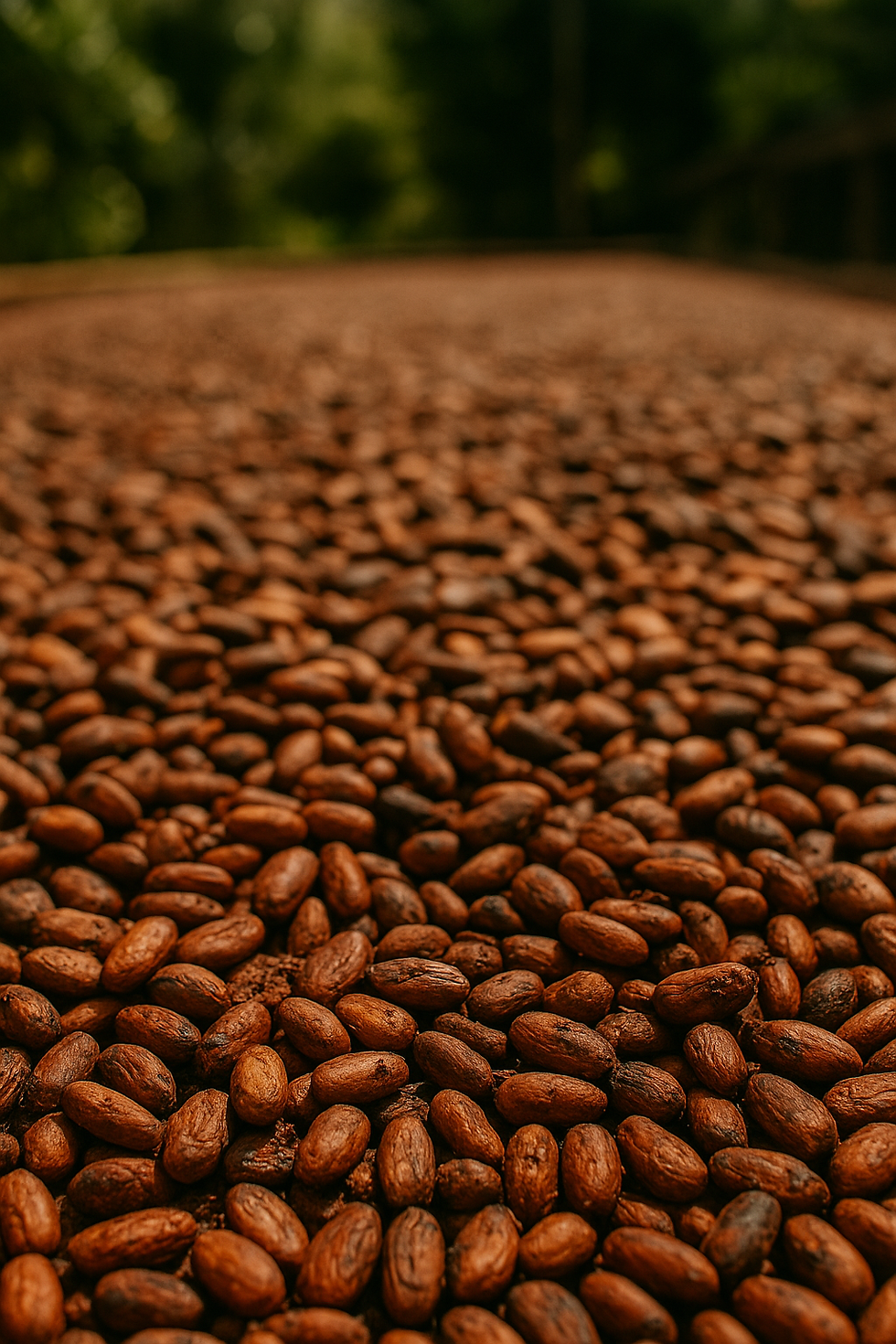
The nibs in the cover artwork were developed using Ll1324's public-domain photograph as a physical reference.


Comments