


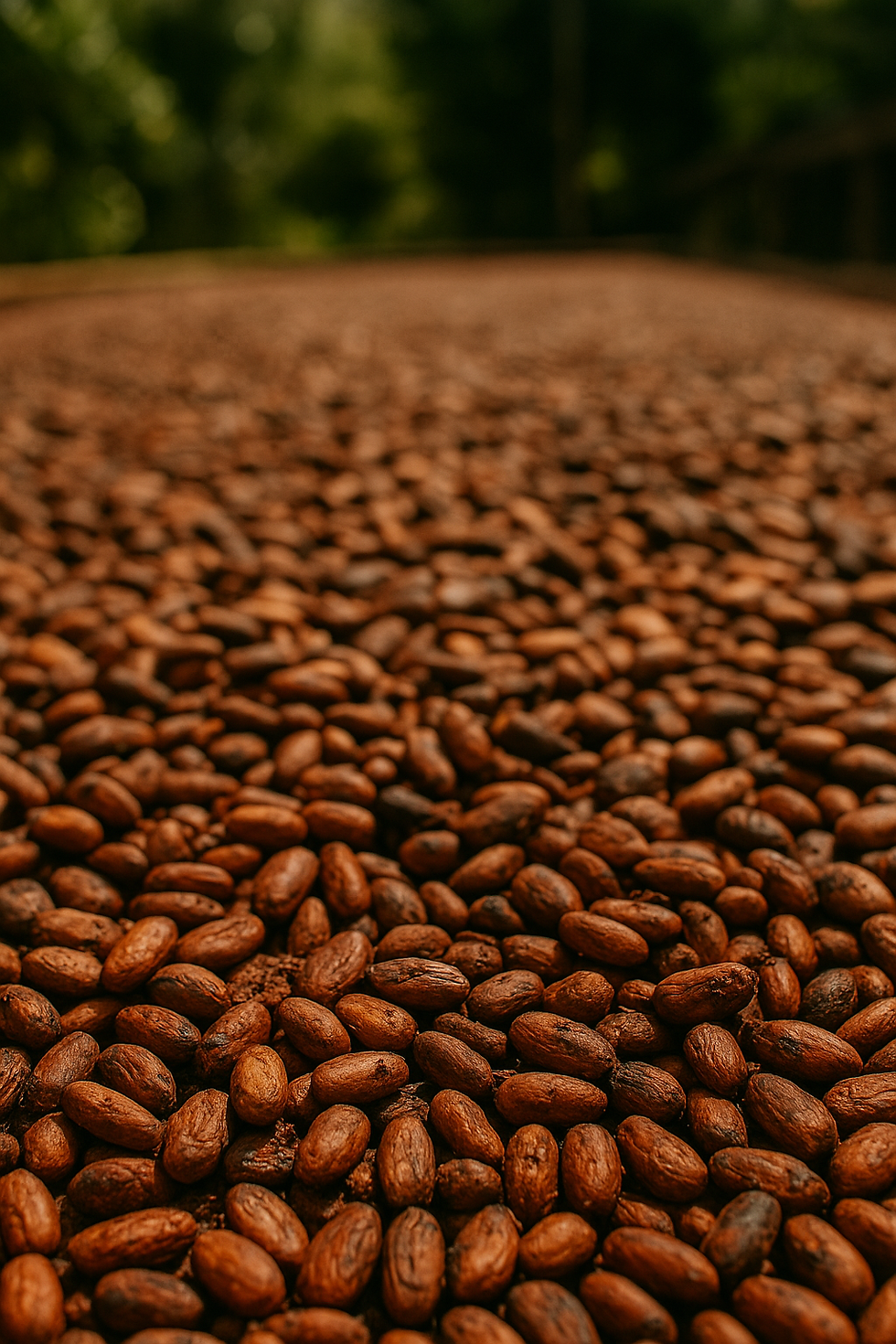

Cacao Husk Tea — From Bean Shell to Cup

The same bean can lead to two very different cups. Its nib can be ground into cacao mass for a rich drink. Its thin outer shell, when prepared and sold as a food ingredient, can be steeped to make a lighter cacao infusion.
Which husk are we talking about?
Here, cacao husk means the papery shell around the individual cacao bean, also called cocoa bean shell or hull. It does not mean the thick rind of the whole cacao pod. During cracking and winnowing, the shell is separated from the nib. Those thin brown flakes are the ingredient used for this tea.
XOL's husk comes from its Esmeraldas, Ecuador beans after fermentation and drying at origin, followed by light roasting, cracking and winnowing in Tampa. The tea product contains cacao husk alone. [1]

An infusion rather than a whole-cacao drink
In a husk infusion, hot water extracts some compounds, and you strain away the shell. In a whole-cacao drink, the ground nib material remains in your cup. Expect the tea to be lighter, with roasted cacao aroma rather than the dense texture of cacao mass. [1]
Research comparing shell particle sizes and six brewing techniques found that preparation affected the beverage's composition. Measurements of the dry ingredient cannot be read as the amount delivered by an ordinary cup: the extraction method matters. [2]
How to brew XOL cacao husk tea
Use food-grade cacao husk sold specifically for brewing. For XOL husk, start with 1–2 tablespoons per cup of hot water and steep for 7–10 minutes, following our product directions. Use a tea infuser or strain through a fine sieve. [1]
Taste it plain first. For another cup, adjust the amount of husk or steeping time to your preference; cinnamon, citrus peel or a little honey are optional additions. For an iced version, brew hot, strain, cool promptly and refrigerate, then serve over ice. Follow any more specific handling instructions on your package.
Does it contain caffeine?
Cacao shell infusions can contain both theobromine and caffeine. A study of teas made with hulls from different origins measured these methylxanthines; the resulting drink should not be assumed caffeine-free. Amounts depend on the material and preparation, so an exact per-cup claim requires measurements for that product and brewing method. [3]
Laboratory antioxidant measurements also do not establish a health benefit from drinking the tea. The 2019 brewing study measured chemical composition and laboratory activity; it was not a clinical trial showing that tea prevents or treats disease. [2]
Why food-grade sourcing matters
Shell is a useful ingredient only when handled for food use. An investigation of 22 cocoa samples found that ochratoxin A contamination was concentrated in the shell relative to the nib. This does not mean every shell is contaminated; it means that a by-product cannot be presumed suitable for tea merely because it came from cacao. [4]
A later shell-infusion study assessed microbial quality and contaminants alongside composition. It also observed transfer of ochratoxin A into the infusion in its tested samples. Brewing is therefore not a substitute for appropriate sourcing and safety controls. Choose a traceable food product, not landscaping mulch or unidentified processing waste. [5]
Two paths from winnowing
Follow the shell back to cracking and winnowing, or follow the other fraction into cacao nibs.


Comments