

What Is Ceremonial Cacao?

Updated: 3 hours ago
If you have searched for ceremonial cacao, you have probably noticed that different companies define it differently. There is a reason for that: in the United States, “ceremonial cacao” is not a standardized food identity with one legally required recipe or production method.
So rather than pretending there is one universal definition, it is more useful to look at what the product actually is, how it is made, and what separates it from cocoa powder and conventional chocolate.
At its simplest, ceremonial cacao is generally understood as a whole-cacao product intended for drinking, traditionally prepared by melting or blending cacao into hot water or another liquid.
Whole cacao matters
A cacao bean naturally contains both cacao solids and cacao butter.
When the entire bean is ground, those components remain together and form what chocolate makers call cacao mass or cacao liquor. Despite the name, cacao liquor contains no alcohol. It is simply finely ground cacao.
That is the foundation of XOL ceremonial cacao.
This is different from conventional cocoa powder. To make most cocoa powders, cacao mass is pressed so that a significant portion of the cacao butter is removed. The remaining solids are then ground into powder.
Both are cacao products, but they are not the same thing.
Whole cacao retains its naturally occurring cacao butter, which gives a prepared cacao drink a richer texture and fuller mouthfeel.
Ceremonial cacao is not the same as a chocolate bar
Chocolate also begins with cacao mass, but most chocolate bars are formulated for eating rather than drinking.
They may contain sugar, additional cacao butter, milk, emulsifiers, flavorings, or other ingredients depending on the type of chocolate.
Pure ceremonial cacao can be much simpler.
For example, XOL Pure Love contains only cacao.
Our flavored cacao blends begin with cacao mass and add clearly listed ingredients such as spices, botanicals, or coffee ingredients depending on the blend.
How XOL makes ceremonial cacao
Our current cacao comes from Esmeraldas, Ecuador, through a cooperative working with smallholder farms.
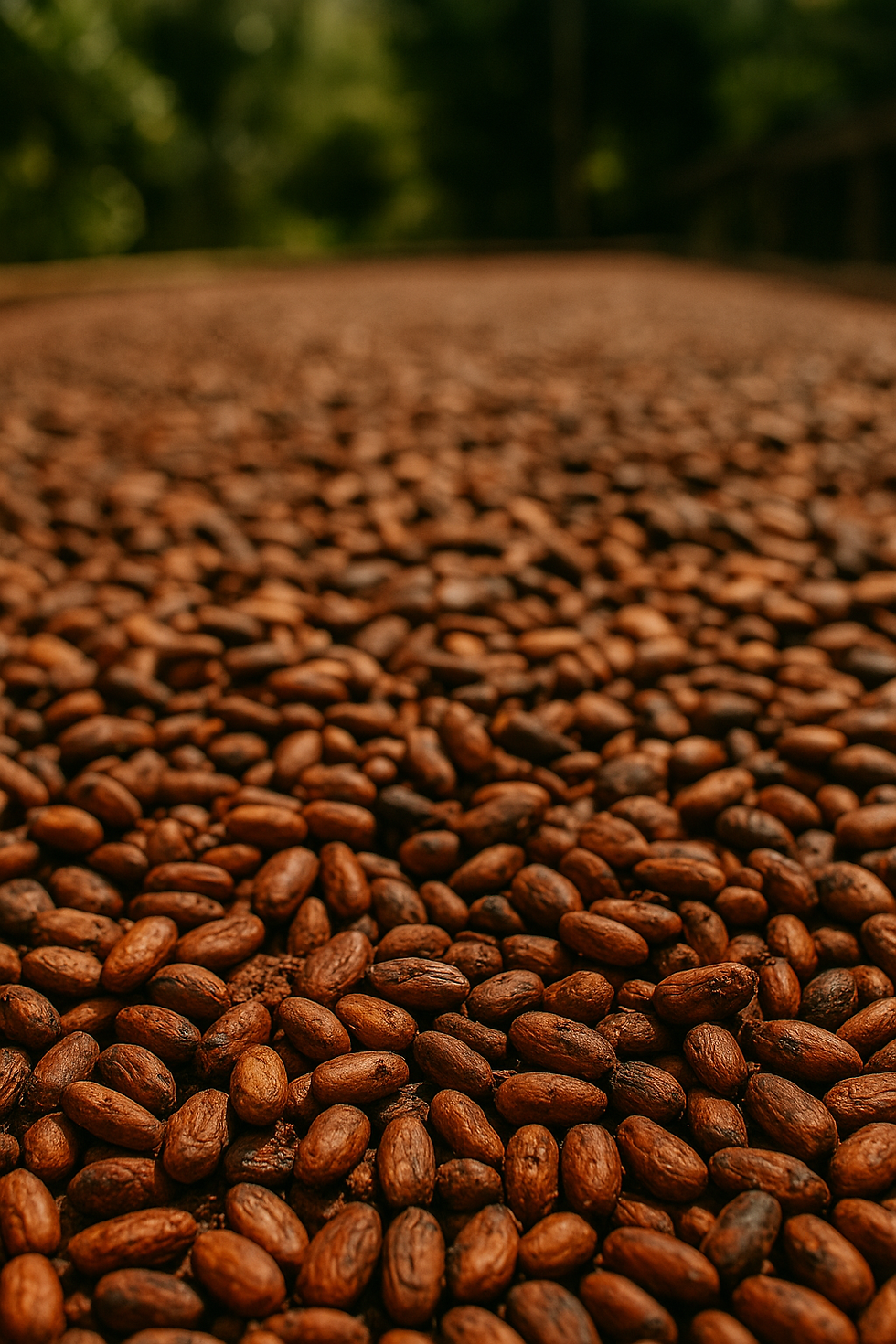
The cacao is fermented and dried at origin. Those steps are essential to developing the flavor precursors that later become the aromas and flavors associated with cacao.
Once the beans arrive in Tampa, we handle the remaining transformation ourselves.
We lightly roast the cacao, crack the beans, remove the outer husk through winnowing, and stone-grind the cacao nibs into smooth cacao mass.
We work in fresh, small batches rather than trying to make every harvest taste identical.
That distinction matters because cacao is an agricultural product. Flavor can naturally vary with genetics, soil, rainfall, fermentation, drying, harvest conditions, and other factors.
We consider some of that variation part of cacao rather than something that always needs to be engineered away.
Does “ceremonial” mean raw?
No.
The words raw cacao and ceremonial cacao are sometimes used together in marketing, but they are not synonyms.
Cacao undergoes fermentation after harvest, and many ceremonial cacao makers—including XOL—also roast their beans.
Roasting develops flavor and aroma through chemical reactions that occur during heating. Processing can also change the concentrations of naturally occurring compounds such as flavanols and methylxanthines, which is one reason broad claims that one processing style automatically makes cacao “healthier” should be treated carefully.
At XOL, we lightly roast our finished cacao products rather than describing them as raw.
What makes cacao ceremonial, then?
There is no single scientific test that turns cacao into “ceremonial cacao.”
For us, the term describes a combination of the product and the way we approach it:
whole cacao rather than heavily defatted cocoa powder; careful sourcing; fermentation and drying at origin; small-batch processing; light roasting; stone grinding; simple formulations; and cacao intended to be prepared as a drink.
The ritual itself is personal.
Some people prepare cacao before meditation or journaling. Others drink it while talking with friends, working, reading, or simply starting their morning.
You do not need to believe that cacao has mystical properties to appreciate the ritual of slowing down and deliberately preparing something.
How to prepare it
Our standard starting point is simple:
Melt one XOL cacao coin into 8–12 oz of hot water or milk and whisk or blend until smooth.
From there, adjust the strength and flavor to your preference.
You can drink pure cacao exactly as it is or add ingredients such as cinnamon, honey, panela, vanilla, chili, or a pinch of salt.
There is no single correct ceremony.
There is simply cacao, preparation, and whatever meaning you choose to bring to the cup.

Comments