


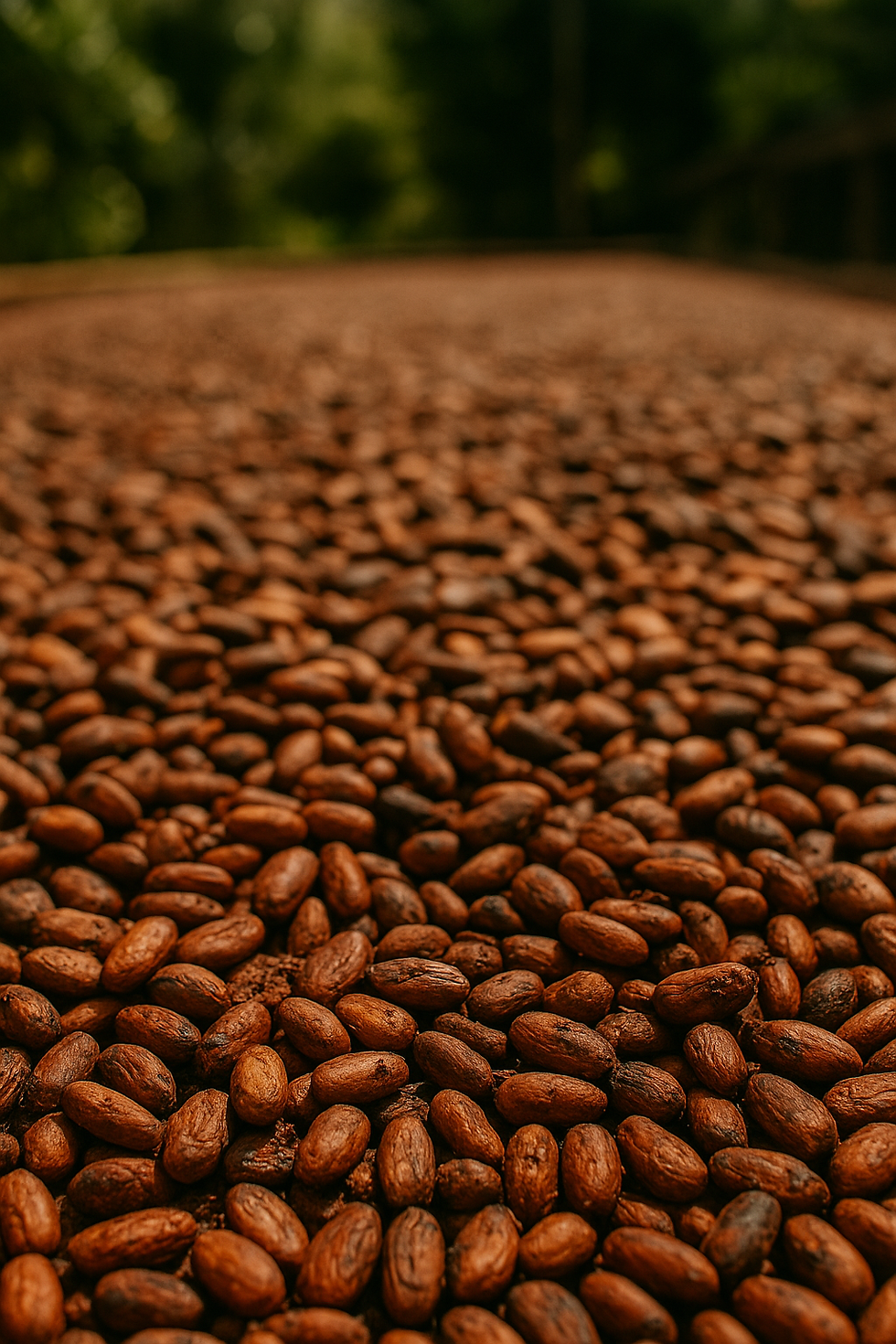

La Colonia: Cacao and Colonialism

Updated: Oct 21
The Indigenous roots and human cost of a global trade
Imagine standing on the deck of a sailing ship, looking toward a green South American coastline. Beyond the shore lie communities, cultivated land, and a crop linking American growers with merchants and consumers across the Atlantic. Cacao’s colonial history follows those connections: how an Indigenous food became an imperial commodity, who gained wealth from it, and who was forced to produce it.

Cacao’s Indigenous roots
That history begins thousands of years before European arrival. At Santa Ana–La Florida in southeastern Ecuador, researchers identified evidence of cacao use dating back approximately 5,300 years. Their findings included starch grains, chemical residues, and ancient DNA. Published in 2018, the study established deep roots for cacao use in the upper Amazon, long before the colonial plantations that would later reshape parts of the Americas. [1]
In Mesoamerica, cacao acquired distinct meanings among different peoples, including the Maya and the Mexica, often called the Aztecs. It appeared in valued drinks and ceremonial life. In some societies, cacao beans also circulated as money and were collected as tribute. A bean could therefore hold several kinds of value: something to consume, something to exchange, and something rulers could demand. These practices varied across places and periods. [2] [3] [11]
Chocolate becomes a colonial commodity
Europeans entered a world that already knew cacao’s worth. Spanish colonists adopted chocolate drinking and Indigenous preparation traditions in the Americas. In Europe, chocolate gradually became associated with wealth and status, especially during the seventeenth century. It was primarily a beverage; the familiar modern chocolate bar came much later, with nineteenth-century manufacturing changes. [5] [7]
Sweetened chocolate also linked cacao to another colonial crop: sugar. European demand for chocolate, coffee, and tea helped expand sugar consumption. That appetite had consequences far beyond the drinking cup, contributing to the growth of sugar cultivation and the enslavement of people who produced it. Chocolate’s appeal connected consumers to both cacao-growing and sugar-producing economies. [8]
For European empires, tropical colonies offered access to the conditions cacao needs to grow: warmth, moisture, and suitable land. Colonial authorities and settlers took control of resources and drew wealth from Indigenous tribute and coerced labor. Cacao’s commercial success formed part of a broader system that directed resources and profits toward imperial authorities and colonial elites, limiting the control many local people had over their land, labor, and livelihoods. [9] [3] [12] [6]
Cacao trade in Venezuela, Ecuador, and the Amazon
Venezuela offers a particularly clear example. During the seventeenth century, cacao became central to the economy around Caracas. Much of its trade connected the Venezuelan coast with New Spain, especially present-day Mexico. Colonial cacao commerce was therefore also a trade within the Americas, sustained by consumers there. Profitable harvests helped build the fortunes of landowners and merchants. [4]
Cacao became valuable enough to attract a royal trade monopoly. Chartered in 1728, the Real Compañía Guipuzcoana de Caracas received exclusive rights to carry cacao from Caracas to Spain. The crown sought more revenue and tighter control over smuggling. Those privileges show cacao’s economic importance: powerful institutions competed to control who could transport and profit from it. [4]
Ecuador’s coast developed another important cacao economy around Guayaquil. There, cacao supported commerce and other economic activity, while imperial restrictions helped make contraband part of the trading system. In the Portuguese Amazon, cacao became a leading colonial export, obtained through both cultivation and collection from forest stands. There was no single colonial cacao economy; its organization depended on local environments, labor systems, and markets. [10] [6]
Slavery and coerced labor behind the wealth
The wealth came with a human cost. In the Caracas region, expanding cacao production was closely tied to African slavery. In Portuguese Amazonia, Indigenous labor was central to the cacao economy, including coercive labor arrangements. These histories belong beside the stories of ships, merchants, and fashionable European drinking rooms. Enslaved and coerced workers supplied the labor on which much of that prosperity depended. [12] [6]
Cacao’s worth changed with the society using it and the market buying it. Beans could serve as money in one setting, tribute in another, and an export crop elsewhere. Its importance was especially pronounced in particular producing regions, even though other commodities often exceeded it in the wider colonial economy. [2] [3] [7]
Keeping more value at origin
Today, Latin American cacao growers, cooperatives, and chocolate makers are working to shape more of that value themselves. Producing finished chocolate in cacao-growing countries can keep more processing work, skills, and business income at origin. Producer cooperatives and locally owned chocolate businesses offer different ways to give local people a greater role in how cacao is made and sold. [13] [14]
These efforts give fresh expression to pride in cacao’s roots, connecting cultural recognition with greater local ownership and opportunity. For those of us who work with cacao, appreciating its flavor also means recognizing the people behind it and asking how more of its value can benefit the places it comes from.


Comments