

What Is Cacao Pulp Juice?

Updated: 3 hours ago
When most people hear the word cacao, they think of chocolate.
But chocolate comes from only one part of the cacao fruit: the seeds, or cacao beans.
Inside every cacao pod, those beans are surrounded by a soft, pale pulp. That pulp is part of the fruit itself, and its flavor is surprisingly different from chocolate.
It is the starting point for what we call cacao pulp juice.
What is cacao pulp?
Cacao pulp is the moist, mucilaginous fruit surrounding the cacao beans inside a ripe cacao pod.
Fresh cacao pulp contains mostly water along with naturally occurring sugars, organic acids, pectin, and other plant components. Published analyses commonly describe cacao pulp as acidic and sugar-containing, although its exact composition varies with variety, ripeness, growing conditions, and processing.
Its flavor does not taste like a chocolate bar.
Fresh cacao pulp is generally sweet, tart, tropical, and aromatic. That contrast surprises many people because the pulp and the cacao bean occupy the same fruit but have completely different flavor profiles.
The pulp is important to chocolate too
Cacao pulp is not simply packaging around the bean.
It plays an important role in cacao fermentation.
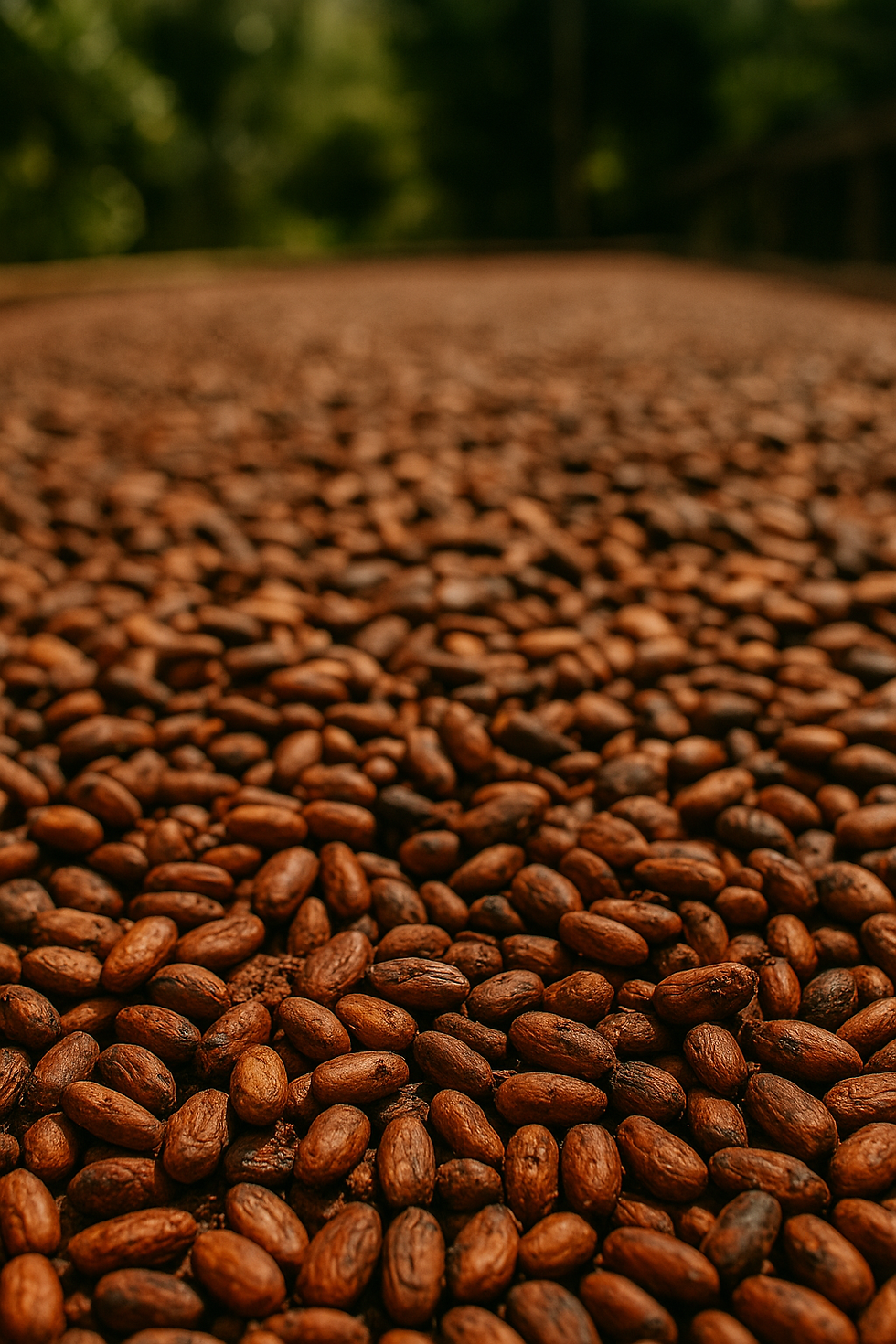
After cacao pods are opened, the beans and surrounding pulp are traditionally fermented together. Yeasts and bacteria consume sugars and other compounds in the pulp, creating a succession of chemical changes that helps develop flavor precursors inside the cacao beans.
Fermentation is one of the most important steps between fresh cacao fruit and finished chocolate.
As fermentation progresses, much of the pulp breaks down and drains away as liquid sometimes called cacao sweatings or cacao honey.
That liquid and the pulp itself can also become useful food ingredients rather than simply disappearing during fermentation. Research has explored cacao pulp for beverages, food products, and other value-added uses.
How cacao pulp becomes juice
To make a cacao-fruit beverage, some of the pulp or liquid derived from the pulp is separated from the beans and collected.
Because that pulp also participates in fermentation, removing it has to be managed carefully when the beans are still intended for chocolate production.
Research suggests partial pulp removal can be compatible with successful fermentation under appropriate conditions, but the relationship between pulp quantity, fermentation, cacao variety, and final chocolate flavor is more complicated than simply saying more or less pulp is always better.
That complexity is one reason cacao remains such an interesting agricultural product.
The fruit, fermentation, and bean all influence what eventually becomes chocolate.
Is cacao juice chocolatey?
Usually, no.
Chocolate flavor develops primarily from the cacao seed through fermentation, drying, roasting, and later processing.
The fresh pulp surrounding that seed is much more fruit-like.
People tasting cacao fruit for the first time are often surprised that something growing around a cacao bean can taste bright and tropical rather than dark and chocolatey.
That makes cacao pulp useful as its own ingredient instead of treating it only as a step on the way to chocolate.
What is in XOL Cacao Juice?
Our current Cacao Juice is deliberately simple.
It contains cacao pulp juice, water, and lime.
Each bottle contains 8 oz.
We keep it refrigerated, and because it is a fresh, perishable product, we ship it frozen to help maintain quality during transit.
It should be refrigerated promptly when it arrives and kept cold until consumed.
We do not describe it as shelf-stable, and we do not make a fixed shelf-life promise unless a particular process and batch have been properly validated.
What about the nutrition?
Cacao pulp naturally contains sugars, acids, water, and other plant compounds.
That is interesting enough without turning it into a miracle drink.
The nutritional composition of cacao pulp can vary considerably, and a research measurement from one cacao variety or processing method should not automatically be treated as the composition of every bottle of cacao juice.
That is why we avoid broad claims such as natural electrolyte drink, energy drink, or guaranteed antioxidant benefits unless a finished product has actually been tested to support those statements.
For us, cacao pulp juice is first and foremost a food made from another remarkable part of the cacao fruit.
More than just the bean
One of the most interesting things about cacao is how much of the fruit exists beyond chocolate.
There is the pod itself.
There is the pulp.
There is the bean.
There is the husk surrounding the roasted bean.
And each part can potentially have a useful culinary application.
Learning to use more of the cacao fruit can create new products while helping people understand that cacao is not merely an ingredient arriving in a bag.
It begins as a tropical fruit.
Cacao pulp juice lets you taste a part of that fruit most chocolate consumers never experience.

Comments