


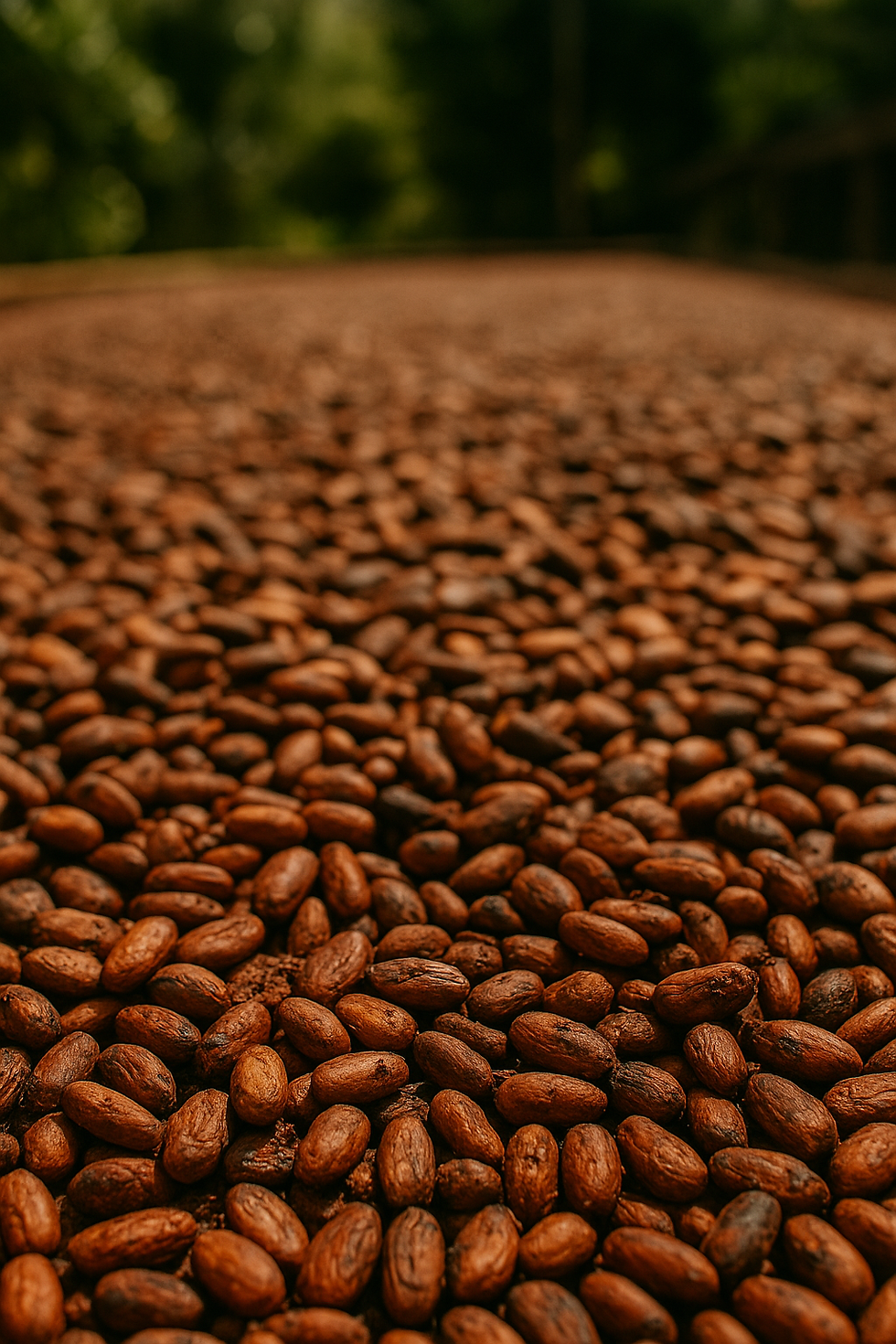
Science of Cacao: Caffeine — How Much Is in Your Cacao?


Cacao naturally contains caffeine. The useful question is how much ends up in the portion you actually consume.
A spoonful of cacao powder, a piece of dark chocolate, and a drink made from whole cacao are different preparations. Giving them all one caffeine number would hide those differences.
At a glance
Compare the cacao product and portion, not just the size of the mug.
More water dilutes the drink; it does not remove caffeine.
Generic food data is a reference point, not a laboratory result for XOL.
Start with the serving
USDA food-composition data provides useful reference points:
Food | Portion | Approximate caffeine |
Unsweetened cacao powder | 1 tablespoon, 5.4 g | 12 mg |
Unsweetened baking chocolate | 15 g | 12 mg |
Dark chocolate, 70–85% cacao | 28 g | 22 mg |
These are generic reference values, not measurements of a particular brand. The chocolate figures are calculated from USDA values of approximately 80 milligrams per 100 grams; the powder entry contains approximately 230 milligrams per 100 grams. [1]
For comparison, the FDA lists 113–247 milligrams for 12 fluid ounces of regular brewed coffee, approximately 71 milligrams for black tea, and 37 milligrams for green tea in the same drink volume. Preparation and product differences still matter. [2]
A drink made with one tablespoon of the reference cacao powder would therefore contain substantially less caffeine than that coffee serving—provided its other ingredients contribute none.
Why does cacao’s caffeine content vary?
Cacao is an agricultural ingredient with a variable chemical composition.
Research comparing cacao from different production areas has found differences in caffeine associated with cacao type and growing location. Researchers also observed changes during fermentation and drying. One result from one sample cannot describe every harvest or finished product. [3]
The form of the food matters too. Notice that the reference cacao powder contains more caffeine per gram than the reference baking chocolate. Using a powder value to estimate whole-cacao paste would give a misleading result. [1]
For a specific product, a reliable manufacturer measurement is more informative than a generic chart.
More water changes the strength—not the total
Imagine preparing a drink with a measured portion of cacao.
Adding extra water makes the drink less concentrated. If you finish the entire cup, however, you still consume the caffeine supplied by that original portion.
The same arithmetic applies to milk or ice. They change the volume, texture, and flavor balance; they do not subtract caffeine.
Using twice as much of the same cacao product approximately doubles its caffeine contribution. Adding coffee adds another source.
The amount of cacao in the cup tells us more than the size of the mug.
What about a XOL cacao coin?
A 15-gram portion gives us a useful serving weight, but weight alone does not establish its caffeine content.
The baking-chocolate example above is not a laboratory result for XOL. We should only attach a precise milligram figure to a XOL serving when we have suitable product-specific data.
For blends containing coffee, the calculation also needs to include those coffee ingredients. A number for plain cacao cannot describe the complete blend.
Caffeine and theobromine are different compounds
Cacao also contains theobromine, another member of the methylxanthine family. Their quantities and effects should be considered separately: milligrams of theobromine cannot simply be added to caffeine and reported as “total caffeine.” Human studies have found different responses to the two compounds. [4]
Put your cup in context
Caffeine sensitivity varies. A smaller amount may still affect someone who is sensitive to it, particularly when combined with other sources throughout the day.
The FDA cites 400 milligrams daily as an amount not generally associated with negative effects for most adults. That is not a target or a personal guarantee. Pregnancy, breastfeeding, certain medications, and health conditions can change what is appropriate; those circumstances warrant individual guidance. [2]
When comparing drinks, look for the product, the portion, and the caffeine per serving. Those three details turn a vague comparison into something useful.


Comments